
If you’re spending money on your garden, it’s natural to wonder whether you’re actually adding value to your home – or simply creating something that looks good for a few years.
The answer isn’t necessarily about choosing the most expensive paving, installing the biggest garden room or filling the garden with impressive features.
The garden improvements most likely to add value are the ones that make the space more usable, attractive, private and easy to maintain – and that are built properly in the first place.
A well-designed garden can become an extension of your living space, give you somewhere to entertain, improve privacy and make a property more appealing to future buyers. But equally, an expensive garden can become a liability if it’s difficult to maintain, poorly constructed or dominated by features that won’t suit the next owner.
After more than 30 years working in garden design and landscaping, I’ve found that the biggest difference often comes from getting the fundamentals right.
Here’s where I’d put your money…
1. A high-quality patio that actually works as an outdoor living space
One of the best investments you can make in a garden is a well-designed patio.
But there’s a big difference between simply laying some paving and creating an outdoor living area that feels like a natural extension of your home.
Think about how you use your kitchen or dining room. You don’t put the dining table in a random corner just because there’s space for it. The layout works around how people move, sit, eat and socialise.
Your patio should be designed in exactly the same way.
A good outdoor dining area might need space for a table and chairs, comfortable circulation around them, access back into the house and somewhere for additional seating. It also needs to work with the proportions of the garden rather than taking over the whole space.
Porcelain or Indian sandstone?
Both can create an excellent patio, but they’re quite different materials.
Porcelain paving gives you a clean, contemporary finish and is particularly suited to modern garden designs. It’s hard-wearing and relatively low maintenance, making it a popular choice for homeowners who want a smart finish without spending their weekends cleaning and sealing paving.
Natural Indian sandstone has a softer, more varied appearance. Every slab is different, so it can work particularly well if you want a more natural or traditional feel.
The important thing isn’t choosing whichever material happens to be fashionable. It’s choosing the right material for the house, the garden and how you intend to use the space.
And whichever you choose, don’t overlook what sits underneath it.
That’s something we’ll come back to later.
If you’re considering a new patio, our patio installation service can be incorporated into a complete garden design rather than treated as an isolated feature.
2. Privacy and good-quality fencing
A garden doesn’t feel particularly valuable if you feel as though the neighbours are watching you every time you sit outside.
Privacy is one of those features you might not notice when it’s done well, but you certainly notice when it’s missing.
Good fencing can make a garden feel more private, secure and finished. It’s particularly important for families with children or pets, and for properties where gardens are overlooked.
But fencing shouldn’t simply be an afterthought.
The height, position, materials and colour can all affect how the garden feels. A poorly positioned tall fence can make a smaller garden feel enclosed, while a thoughtfully designed boundary can create privacy without making the space feel boxed in.
It’s also worth considering what you can see beyond the fence. Sometimes screening a particular sightline is more effective than simply making every boundary as high as possible.
This is where garden design earns its keep.
We regularly incorporate bespoke garden fencing into wider garden transformations so the boundaries work with the rest of the design rather than looking like something that’s been added afterwards.

3. A garden room, office or studio that gives the garden a purpose
The way we use our homes has changed considerably, and that has made dedicated garden buildings much more useful.
A well-designed garden office, studio, summerhouse or garden room can give you additional usable space without extending the main house.
But I’d be careful about thinking of a garden room simply as “adding square footage”.
It’s the usefulness of the space that matters.
A dark shed with a desk in it isn’t going to transform how you use your home.
A properly considered garden building with good access, natural light, heating, power and a setting that connects it with the garden is a very different proposition.
We’ve seen this work particularly well where a garden has been designed around several distinct uses – perhaps a dining terrace close to the house, planting and lawn through the middle, and a garden room positioned further away to create a quieter destination.
One thing to remember if you’re considering a garden office is that planning and building regulations can depend on the size, position and intended use. Planning Portal provides the current guidance for outbuildings and permitted development in England.
So don’t assume that every garden room automatically falls under permitted development.
4. Low-maintenance planting that still looks established
Low maintenance doesn’t have to mean removing all the planting and covering the garden in paving.
In fact, one of the biggest mistakes I see is confusing low maintenance with no planting.
A garden can have plenty of greenery and still be straightforward to look after.
The trick is choosing the right plants and putting them in the right places.
Evergreen planting can provide structure throughout the year, while seasonal plants bring colour and change. The RHS recommends thinking about the amount of maintenance you realistically want to do and choosing plants according to the conditions in your particular garden.
For us, the bigger consideration is always the garden as a whole.
A border packed with plants that need constant attention might look fantastic on day one. But if the owner doesn’t enjoy gardening, it can quickly become overgrown and expensive to maintain.
I’d much rather create a planting scheme that looks good when it’s established and fits the amount of time the homeowner actually wants to spend maintaining it.
That might mean using evergreen shrubs for structure, planting in larger groups rather than lots of individual specimens, and leaving enough room for plants to mature without constantly needing to be cut back.
A garden should get better as it matures, not become a constant battle.
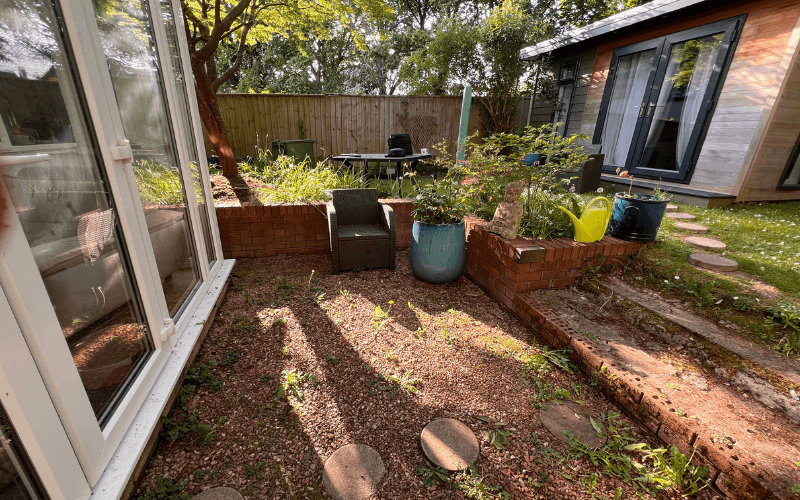
Before
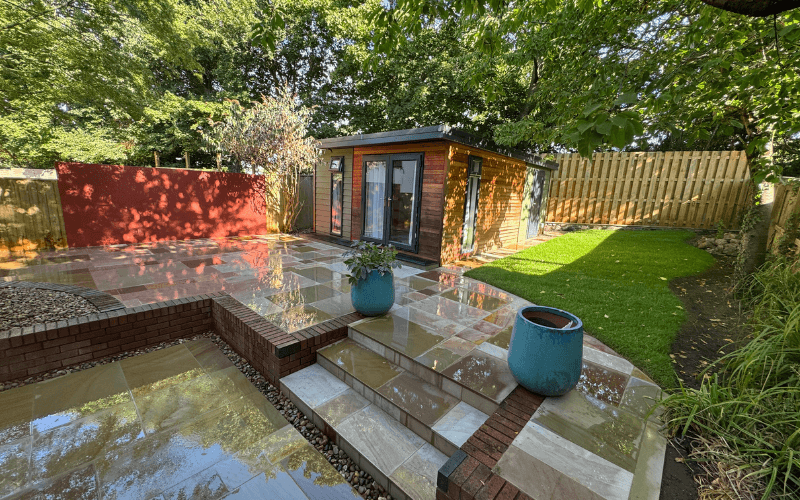
After
5. Get the drainage and foundations right
This is probably the least glamorous part of a garden transformation.
It’s also one of the most important.
You won’t see the sub-base underneath your patio once the job is finished. You won’t see the drainage system when you’re sitting outside with a drink on a summer evening.
But if either has been done badly, you certainly know about it later.
A patio is only as good as the preparation underneath it.
If the ground hasn’t been properly prepared, or water isn’t being dealt with correctly, you can end up with movement, sinking, cracked paving, standing water and other problems that are expensive to put right.
Drainage also needs to be considered as part of the garden design rather than added when problems occur. Government guidance on sustainable drainage recommends managing surface water as close to where the runoff occurs as practicable, rather than simply sending more water into existing drainage systems.
This is particularly important in gardens with:
- slopes or changes in level
- large areas of paving
- heavy or poorly draining soil
- existing waterlogging problems
- patios close to the house
- significant changes to ground levels
It’s one of the reasons we look at the ground conditions and drainage before deciding what goes on top.
You can spend a fortune on beautiful paving, but it won’t compensate for poor groundwork.
That’s where trying to save money can become a very expensive false economy.
Our landscaping service includes the groundworks, drainage and preparation needed to create a garden that’s designed to last.
6. A garden layout with proper zones
One of the things that can make the biggest difference to a garden isn’t a particular product at all.
It’s the layout.
A garden that has been divided into sensible zones can feel considerably bigger and more useful than a garden of the same size where everything has simply been squeezed in.
You might have:
- a dining terrace close to the house
- a lawn or open area for children and pets
- planting to soften boundaries
- a quieter seating area
- discreet storage
- a garden room or studio
- pathways that connect everything naturally
The key is that each area has a reason for being there.
Good garden design isn’t about filling every available space. It’s about deciding what the space needs to do.
This is particularly important in smaller gardens. Trying to include a patio, lawn, hot tub, outdoor kitchen, shed, pergola, water feature and several borders can actually make the garden feel much smaller.
Sometimes removing something adds more value than installing something.
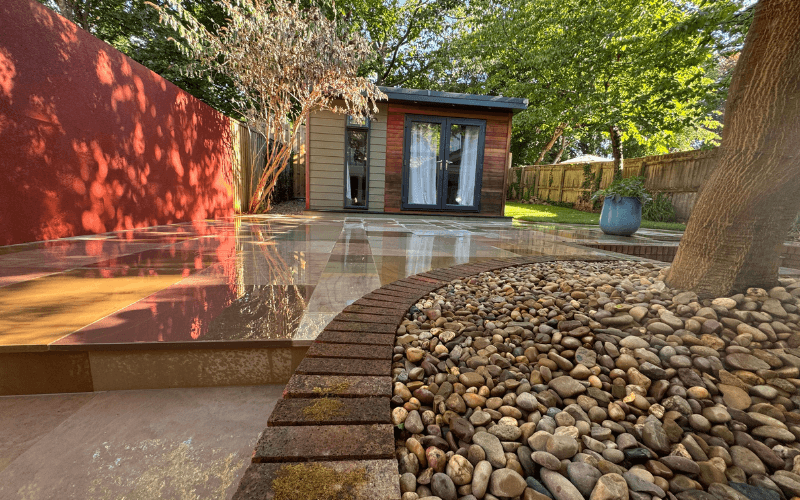
7. Outdoor lighting that makes the garden usable after dark
A garden shouldn’t disappear as soon as the sun goes down.
Well-planned outdoor lighting can extend the amount of time you can use the space and make the garden feel completely different in the evening.
I’m not talking about covering everything in bright lights.
Subtle lighting works much better.
You might highlight a pathway, illuminate steps for safety, pick out a specimen tree or use softer lighting around an entertaining area.
The best lighting is often the lighting you don’t immediately notice. You simply notice that the garden feels warm, inviting and easy to move around.
And there’s another benefit: if you’re thinking about your property from a buyer’s perspective, a garden that looks good in the evening can make a strong impression.
8. Practical improvements such as off-street parking
For some properties, particularly where street parking is difficult, the front garden can have a very practical role to play.
Creating off-street parking with a well-designed driveway can make a property considerably more convenient for the people living there – particularly families, households with multiple cars or anyone who regularly has visitors.
But again, this shouldn’t mean simply covering the entire front garden in hardstanding.
The design needs to balance parking with kerb appeal, planting and drainage.
If you’re replacing a large area of front garden, drainage and permeability also need to be considered. Government guidance specifically addresses the use of permeable surfaces and drainage when creating driveways and other hard surfaces.
A driveway should solve a problem without creating another one.
What garden improvements can actually reduce your home’s appeal?
It’s easy to concentrate on what you should add to a garden.
Sometimes it’s more useful to think about what you shouldn’t add.
Overly complicated outdoor kitchens
Outdoor kitchens can be fantastic if you’ll genuinely use one.
But installing a huge cooking and entertaining area because it’s currently fashionable doesn’t automatically add value.
If it takes up half the garden and you only use it twice a year, you’ve sacrificed valuable space for something that doesn’t work for you.
Large water features
A water feature can be a beautiful focal point when it’s carefully designed.
A huge, difficult-to-maintain feature that dominates the garden is another matter.
The same applies to swimming pools and hot tubs. They can be hugely enjoyable for the right homeowner, but they’re expensive to maintain and won’t appeal to everyone.
Overcrowded gardens
This is probably the most common mistake.
More features don’t necessarily mean more value.
A garden needs breathing space.
If you have to squeeze past the dining table to get to the lawn, step around a water feature to reach the garden room and navigate three different levels to find the bins, the design isn’t working as hard as it could.
The best gardens feel effortless because everything has a purpose.
So, what adds the most value to a garden?
If you’re looking at your garden as an investment, I’d prioritise function over fashion.
The improvements most likely to make a meaningful difference are those that make the garden:
Usable – with somewhere to eat, relax and entertain.
Private – with boundaries and screening that make you comfortable using the space.
Low maintenance – without removing all the character and planting.
Well designed – with clear zones and a layout that makes sense.
Well built – with proper foundations, drainage and quality materials.
Adaptable – so the space works for different stages of life and different uses.
And perhaps most importantly, it should feel like it belongs with the house.
That’s something we think about on every project. We’re not interested in simply adding expensive features to a garden. We want to understand how you live, what isn’t working currently and what you want the garden to do for you.
That’s why our garden design process starts with understanding the site, your requirements and how you want to use the space before we get into the details.
A garden is an investment – but only if it’s designed properly
If you’re considering spending money on your garden, don’t start with the question:
“What feature should we add?”
Start with:
“What would make this garden work better for us?”
It might be a beautiful new patio. It might be better privacy. It might be a garden office, improved drainage or simply a layout that makes the space feel twice as useful.
And if you’re planning a complete transformation, getting the design right before the construction begins can save you from making expensive decisions that are difficult to undo later.
At Jacksons Landscape Designs, we design and build bespoke gardens across Devon, combining garden design, landscaping and specialist groundwork into one project.
View our portfolio of completed garden transformations for inspiration, or contact us today on 01626 332533 to discuss your garden and what you’d like it to achieve.