
One of the biggest mistakes people make when investing in a new garden is designing for today rather than the next twenty years.
It’s completely understandable. If you have young children, you’re thinking about footballs on the lawn, somewhere to put a trampoline and being able to watch the kids while you’re making dinner. If your children have grown up, your priorities might be outdoor dining, entertaining friends or creating a peaceful space to relax.
The problem is that families don’t stay the same.
Children become teenagers. Teenagers leave home. Grandchildren arrive. Mobility changes. Hobbies change. The way you use your garden changes too.
A well-designed landscape should be able to adapt alongside those changes without requiring major reconstruction every decade.
Major structural changes to an established garden can involve significant excavation, drainage work and rebuilding, making them far more expensive than incorporating flexibility into the original design.
The solution is to create a highly adaptable, multi-generational garden that acts as a flexible framework, evolving alongside your family as your needs change.
That’s why, when we design gardens at Jackson Landscape Designs, we’re not simply creating a space that looks beautiful when it’s finished. We’re thinking about how that garden will function five, ten and twenty years from now.
Designing for flexibility, not fixed uses
Rather than assigning permanent functions to every corner of the garden, we look at how spaces can evolve.
Instead of seeing a lawn as simply somewhere for children to play, we see it as flexible open space.
Instead of viewing a patio purely as an outdoor seating area, we consider whether its foundations could eventually support an outdoor kitchen, pergola or garden room.
This approach gives homeowners far greater value from their investment because the underlying structure of the garden doesn’t become obsolete as family life changes.

Think in zones, not features
One of the simplest ways to future-proof a garden is through careful zoning.
Every successful multi-generational garden contains areas that can evolve independently rather than requiring the whole space to be redesigned. The aim is to ensure one part of the garden can change without the rest needing to be rebuilt.
Zone One: Flexible family space
For many families this begins as lawn. Not because every garden needs grass, but because open space is incredibly adaptable.
Initially it might accommodate:
- football goals
- children’s play equipment
- paddling pools
- family games
- dogs
Years later, that exact same footprint could become:
- ornamental planting
- a wildflower meadow
- a swimming pool
- a sun terrace
- additional entertaining space
The important consideration is creating a shape that allows future flexibility rather than squeezing awkward leftover spaces around today’s play equipment.
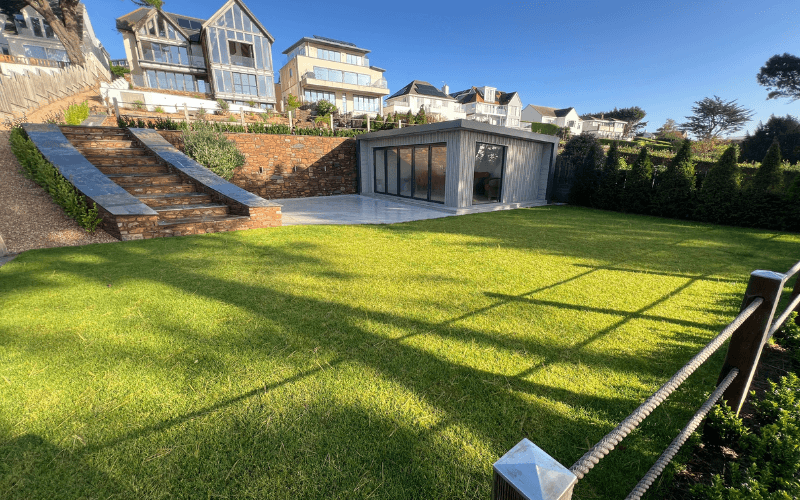
Kerry’s Design Insight: One thing we’ve learnt is that families often overestimate how much dedicated play equipment they’ll need in the long term. A trampoline or climbing frame may only be a feature for a few years, but the lawn itself remains one of the most valuable parts of the garden. By keeping this space open and well-proportioned, it can evolve naturally as family life changes without leaving awkward gaps to redesign later.
Zone Two: The permanent entertaining hub
The area immediately outside the house often becomes the hardest-working part of any garden.
It’s where people naturally gather. It’s also the area most likely to evolve.
A young family may simply need space for outdoor dining and children riding scooters.
Ten years later that same area may include:
- an outdoor kitchen
- built-in seating
- pizza oven
- fire pit
- lighting scheme
- integrated planting
The key is building the patio properly from the outset, so it has the structural integrity to support whatever comes next.
That means considering:
- finished levels
- drainage falls
- sub-base depth
- edge restraints
- access routes
- service locations
Retrofitting these elements is significantly more disruptive than incorporating them during the original build.
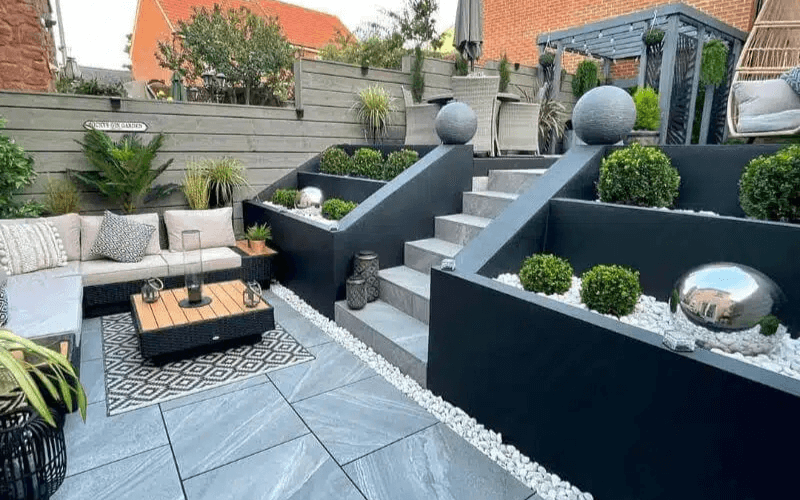
Kerry’s Design Insight: Outdoor kitchens, feature lighting and pergolas are among the additions clients most often ask about a few years after their garden has been completed. That’s why we always encourage people to think beyond their immediate wish list. Allowing for these possibilities during the initial build is far simpler than trying to retrofit them once paving, drainage and planting are established.
Zone Three: The retreat
Every garden benefits from somewhere quieter.
When children are young this might be a sensory area or reading corner.
Later it becomes somewhere adults can escape from the busier entertaining areas.
We’ve designed spaces that have evolved from:
- sandpits
- playhouses
- vegetable gardens
into:
- pergolas
- home office spaces
- meditation gardens
- outdoor lounges
- firepit seating
Because the structure of the space was considered from the beginning, the transformation required very little reconstruction.
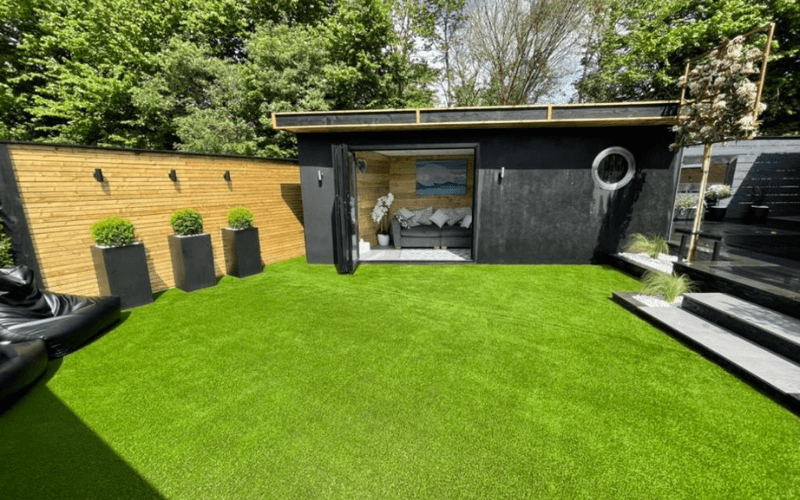
Kerry’s Design Insight: Almost every family benefits from having a quieter corner that’s separate from the main entertaining space. How it’s used tends to change over time, but having somewhere to escape with a book, enjoy a morning coffee or simply take a break from a busy household rarely goes out of fashion.
The infrastructure nobody sees is often the most valuable
The biggest difference between an average garden and a professionally designed landscape usually isn’t what you can see.
It’s what lies underneath.
Before any paving is laid or planting begins, we consider services that clients may not need immediately but could be extremely grateful are already in place years down the line.
Installing future services during the build
Excavation is one of the most expensive stages of any landscaping project.
Once patios are complete and planting established, nobody wants to dig everything back up.
Where appropriate, we’ll often recommend installing empty service ducts beneath paving or lawns while access is straightforward.
These may later carry:
- electrical supplies
- water feeds
- data cables
- irrigation pipework
- speaker cables
- lighting circuits
Plan for future irrigation
It’s also worth planning for irrigation before any planting goes into the ground. Installing pipework after borders are established is considerably more disruptive than incorporating it during construction. Even if an automatic irrigation system isn’t installed straight away, laying the pipework now gives you the flexibility to add one later without disturbing established plants or newly finished landscaping.
Even if these services aren’t connected immediately, having the routes already in place creates enormous flexibility for future improvements. Outdoor kitchens, hot tubs, garden offices and feature lighting all become far simpler additions later.
Drainage should be designed for tomorrow, not just today
One area that’s often overlooked is drainage.
As gardens evolve, more hard landscaping is frequently added.
Without careful planning this can create problems with standing water, overwhelmed drainage systems and unnecessary excavation later.
We always consider how future phases of the garden may affect water movement across the site, ensuring drainage capacity isn’t based solely on today’s layout.
This kind of planning is rarely noticed when everything works well – but it’s immediately obvious when it hasn’t been considered.
Choosing materials that improve with age
Materials need to perform for decades, not just look impressive on installation day.
This is where specification becomes important.
Rather than choosing solely on appearance, we consider durability, maintenance requirements, slip resistance and how materials will weather over time. For example:
Porcelain paving
Modern porcelain offers excellent durability, stain resistance and consistent slip ratings, making it suitable for families with young children while remaining attractive as entertaining spaces evolve.
Natural stone
Natural stone develops character beautifully over time but benefits from selecting the right stone for the environment, proper installation techniques and, where appropriate, sealing to reduce staining and weathering.
Composite decking
Premium composite decking can provide a long-lasting alternative to timber where homeowners want minimal maintenance without concerns about splintering or frequent treatment.
Material selection is never about following trends. It’s about ensuring the garden still performs beautifully fifteen years after installation.
Planting should mature alongside the garden
One of the biggest differences between amateur planting and professional planting is understanding how gardens change over time.
- Plants grow.
- Trees mature.
- Light levels alter.
- Maintenance requirements increase.
A planting scheme designed purely for immediate impact often becomes overcrowded within a few years.
Instead, we create planting plans with maturity in mind.
For younger families, we often specify robust, sensory planting that can cope with everyday use while encouraging pollinators and providing year-round interest.
As the garden matures, the planting should increasingly provide structure, seasonal interest and lower maintenance, allowing homeowners to spend more time enjoying the space rather than constantly managing it.
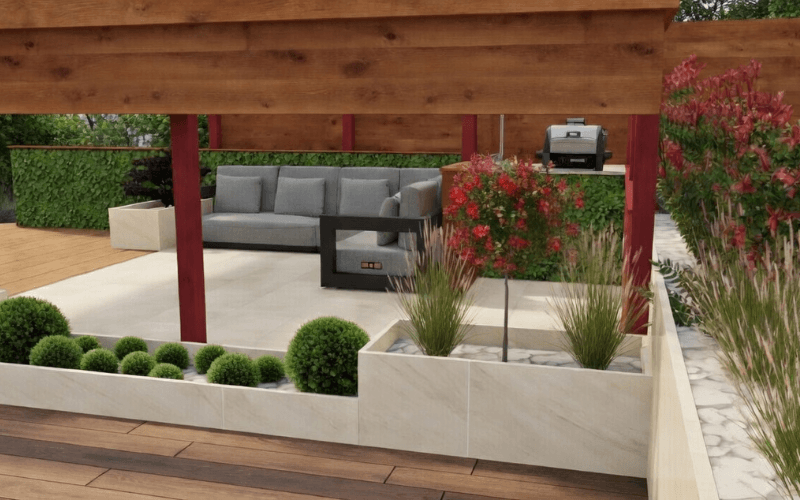
Choosing the right plant in the right place from the outset usually produces far better long-term results than continually replacing underperforming planting.
Accessibility isn’t just for later life
Good garden design isn’t about preparing for old age.
It’s about making gardens enjoyable for everyone.
Wide pathways, level transitions, generous circulation space and thoughtful lighting benefit:
- young children
- parents with pushchairs
- visiting grandparents
- people recovering from injury
- future mobility needs
These are design principles, not accessibility adaptations. They simply make a garden easier and more enjoyable to use throughout life.
Designing once, enjoying for years
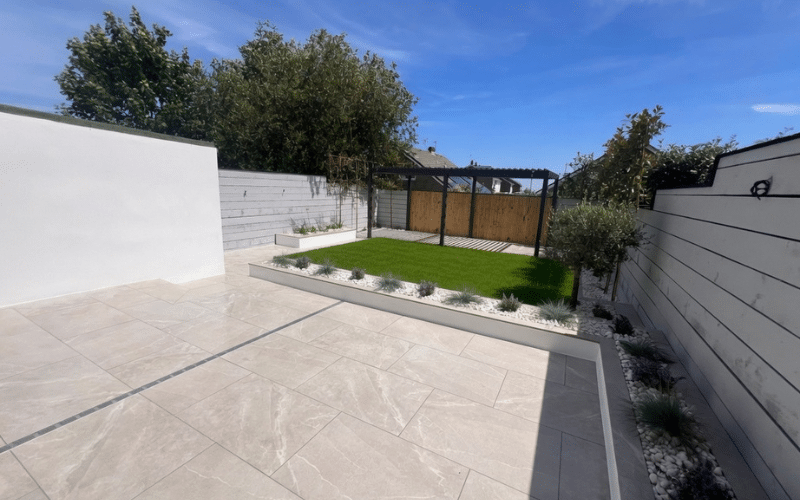
A thoughtfully designed garden shouldn’t only work for the family you are today – it should continue working for the family you’ll become. By considering layout, infrastructure, drainage, materials and planting from the very beginning, it’s possible to create an outdoor space that evolves naturally for decades to come.
If you’re planning a garden redesign in Devon and want a landscape that’s built with both today’s lifestyle and tomorrow’s possibilities in mind, we’d love to help. Explore our landscaping services, browse our recent garden design projects or get in touch to arrange a consultation.
Get in touch to discuss your project.
Call Jacksons Landscape Designs on 01626 332533