
When homeowners think about transforming their garden, they often focus on patios, planting schemes, lighting, or new lawns. Yet one of the most overlooked features can have the biggest visual impact: the garden walls.
At Jacksons Landscape Designs, we’ve spent more than 30 years creating bespoke outdoor spaces across Devon. One lesson we’ve learned time and time again is that a beautifully designed garden can be let down by tired, weathered walls. Equally, a professionally rendered wall can elevate an entire landscape, creating a clean backdrop that allows every other feature to shine.
In many of our projects, rendering is one of those finishing touches that transforms the overall look and feel of a garden.
You can find out more about our garden design services here.
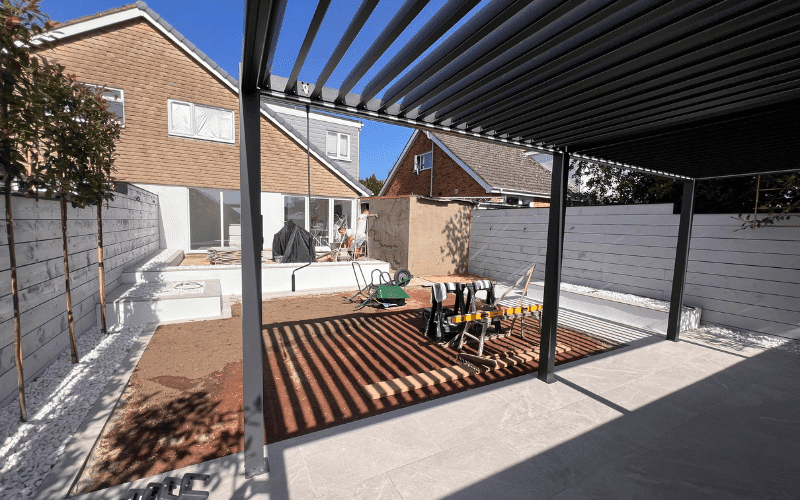
Why We Often Recommend Rendering Garden Walls
Garden walls work hard in the South Devon climate. They are constantly exposed to rain, coastal air, frost, and fluctuating temperatures.
Over time, even well-built brickwork can become stained, weathered, or uneven in appearance.
Rendering offers several advantages:
Improved Weather Protection
A professionally applied render creates a protective barrier against moisture penetration. This helps reduce the risk of frost damage, water ingress, and deterioration of the underlying brickwork.
The importance of managing moisture around external walls is highlighted by the UK Government’s guidance on damp and condensation which explains how excess moisture can affect buildings over time.
For properties in coastal locations such as Torquay, Teignmouth and other parts of South Devon, this additional protection can be particularly valuable.
A More Contemporary Appearance
Many older walls contain mismatched bricks, previous repairs, or signs of age. Rendering creates a uniform finish that instantly modernises the space.
Whether the goal is a sleek contemporary garden or a traditional outdoor setting, the right render finish can help tie the entire design together.
The Perfect Backdrop for Planting
One of the reasons we frequently incorporate rendered walls into our landscape designs is their ability to showcase planting.
Bright white render creates a stunning contrast against evergreen foliage and architectural plants. Darker charcoal and grey finishes can make flowering plants and ornamental grasses stand out beautifully.
In effect, the wall becomes part of the garden design itself rather than simply a boundary.
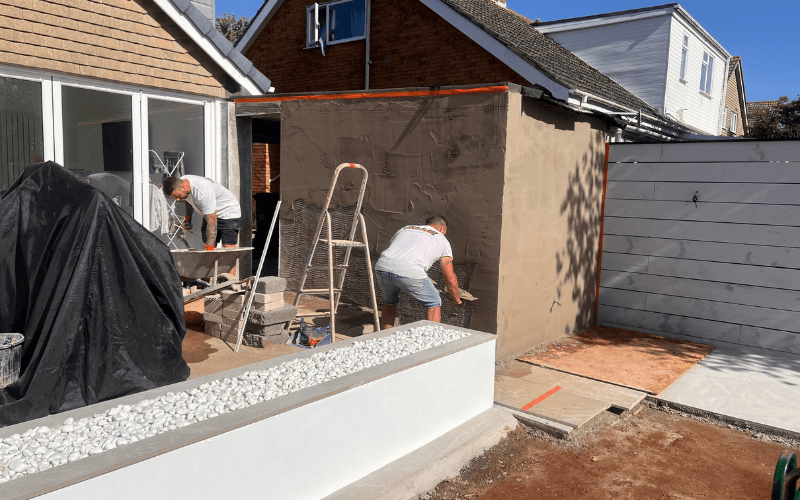
The Preparation Stage Matters Most
Many people focus on the final finish, but the long-term success of rendering depends heavily on the preparation work.
Before any render is applied, the wall should be thoroughly cleaned to remove moss, algae, dirt and loose mortar
Any structural cracks should be repaired and the surface properly primed.
Following recognised industry standards for surface preparation is essential to achieving a long-lasting finish. The Federation of Master Builders’ advice on maintaining external walls provides useful guidance for homeowners considering exterior improvements.
A suitable bonding agent helps ensure the render adheres correctly, particularly on smooth engineering bricks where poor adhesion can lead to future failure.
This preparation stage is one area where experience makes a significant difference.
Understanding the Traditional Two-Coat Rendering System
Although modern rendering products continue to evolve, the traditional two-coat system remains widely used because of its durability.
The Chartered Institute of Building (CIOB) regularly highlights the importance of using appropriate materials and installation methods to improve the longevity of building exteriors.
1. The Scratch Coat
The first coat forms the foundation of the render system.
Typically applied at around 8–10mm thick, this layer consists of a sand, cement and lime mix. Horizontal scratches are then combed into the surface while still wet, creating a key for the second coat.
This coat is normally left to cure for one to two days.
2. Reinforcement Mesh
Where maximum crack resistance is required, reinforcement mesh can be incorporated between coats.
This is particularly beneficial on larger walls or areas exposed to movement and temperature changes.
3. The Finish Coat
The final coat creates the finished appearance.
Applied at around 5–6mm thick, it is levelled carefully before being finished using specialist tools to achieve the desired texture.
The end result can range from ultra-smooth contemporary finishes to more textured traditional appearances.
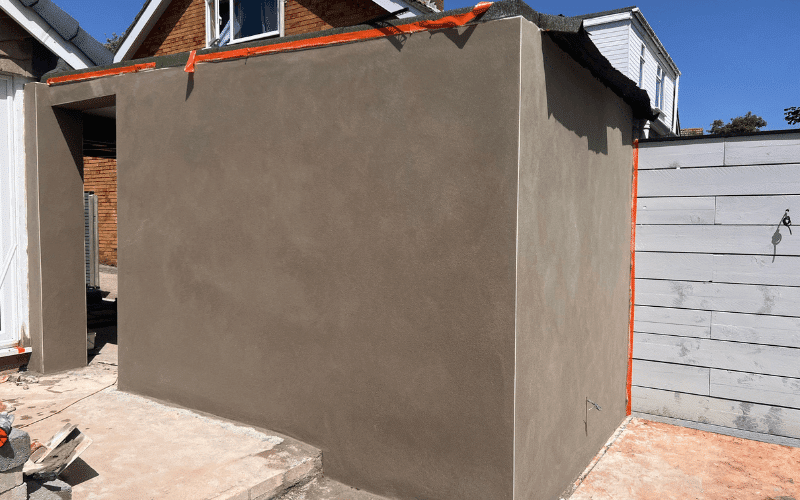
The Detail Most Homeowners Don’t Know About
One of the most common rendering mistakes we see isn’t the render itself. It’s where the render finishes.
Professional installers avoid taking render directly down to soil level or paving. Instead, a gap of approximately 150mm is left between the bottom of the render and ground level. This helps prevent rising damp and splash-back, a principle supported by guidance from the Property Care Association (PCA) on managing moisture around buildings.
Adding a drainage strip of decorative shingle at the base can further improve performance and longevity.
This small detail often makes a significant difference to how long a rendered wall remains in good condition.
Coping Stones: The Unsung Hero
If you’re investing in rendering, it’s worth paying attention to the top of the wall too.
Proper coping stones help channel water away from the wall surface. Ideally, they should overhang the wall by approximately 50mm and include a drip groove underneath.
Without this detail, rainwater can continually run down the face of the render, reducing its lifespan.
Timing Is Everything
Many people assume rendering can be carried out at any time of year.
In reality, weather conditions play a huge role in the final result.
Very hot weather can cause render to dry too quickly, leading to cracking. Freezing temperatures can also damage freshly applied render before it cures properly.
In our experience, spring and early autumn often provide the most reliable conditions for achieving a durable finish.
When temperatures rise unexpectedly, professional installers may use protective coverings such as hessian to control the drying process.
Working with Trusted Local Specialists
At Jacksons Landscape Designs, we regularly collaborate with trusted local trades to ensure every aspect of a project meets our standards.
For plastering and rendering work, we have worked alongside Ellis Plastering Services for many years. As a family-run Devon business, Gordon, Mitchell and Zak have built an excellent reputation for delivering quality workmanship and reliable service.
If you’re considering rendering as part of a garden transformation or property improvement project, we highly recommend visiting Ellis Plastering Services at: www.ellisplasteringservices.co.uk
Working with skilled specialists helps ensure the finished result not only looks fantastic but continues to perform well for years to come.
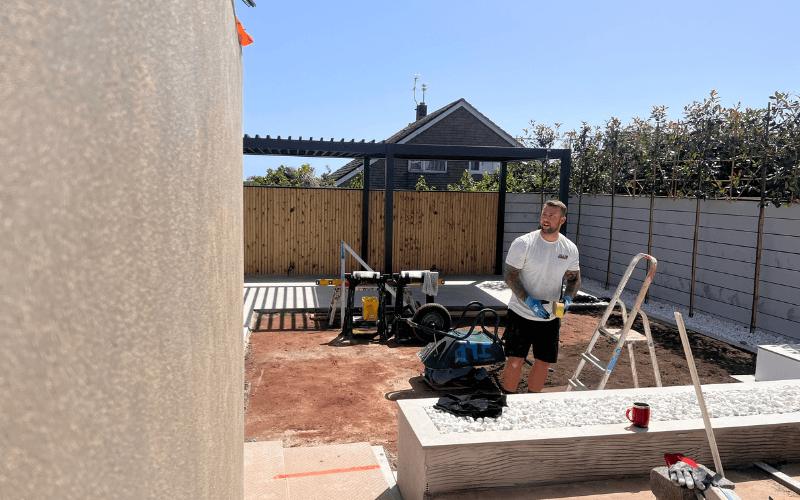
Rendering as Part of a Complete Garden Design
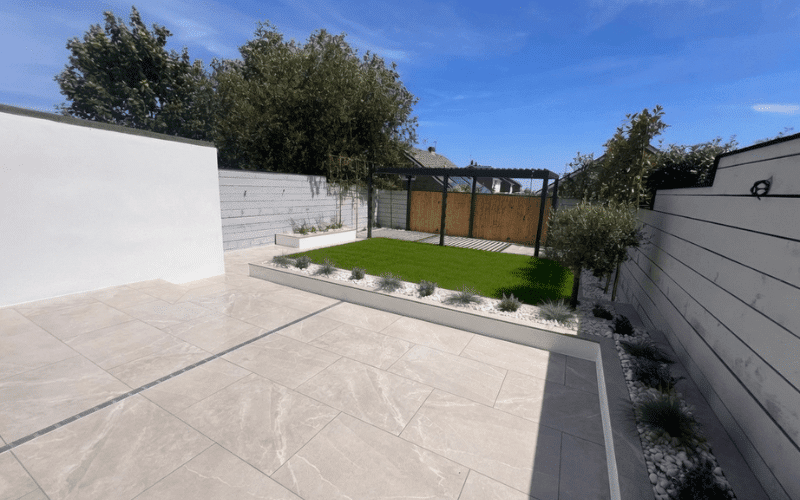
One of the biggest mistakes we see is treating rendering as a standalone project.
The most successful results happen when wall finishes are considered alongside:
- Planting schemes
- Paving materials
- Garden lighting
- Water features
- Retaining walls
- Outdoor living spaces
This integrated approach helps create gardens that feel cohesive, balanced and professionally designed.
You can see examples of how we combine hard landscaping, planting and structural features throughout our completed projects in our gallery.
Thinking About Transforming Your Garden?
At Jacksons Landscape Designs, we create bespoke gardens throughout Devon that are designed to be beautiful, practical and built to last.
Whether you’re planning a complete garden redesign, new landscaping, retaining walls or simply looking to improve existing features, we’d be delighted to help.
Explore our landscaping services and browse our garden design portfolio to see what’s possible.
A well-rendered wall may seem like a small detail, but when combined with thoughtful garden design, it can completely transform an outdoor space.
Get in touch to discuss your project.
Call Jacksons Landscape Designs on 01626 332533